Muscle conductivity is simply the ability to conduct impulses, either electrical or chemical, along the muscle membrane.
Muscles enable you to move. The muscles in your arms lift and pull. Muscles in your legs help you stand, walk and run. Thumb muscles help you to hold things. Muscles in your chest help you to breathe. You have more than 600 muscles and muscle groups in your body. Muscles help us to move if we don’t have muscles we can’t move of our own free will.
Muscles function in many aspects of the body. There are three basic types of muscles:
- 1. Skeletal muscles function to move your body during any activity such as walking, etc.
- 2. Smooth muscle is found in your blood vessels and can regulate blood flow.
- 3. Cardiac muscle is what your heart is made of and is necessary to pump blood to all of your body.
One purpose of the skeletal muscles is to allow movement of the limbs, whereas the smooth muscles keep the body functions going. Also, the heart is a four chambered cardiac muscle, whose sole purpose is to pump blood round our bodies and keep us alive.
Traditional yoga from the ancient East didn’t emphasize how yoga can sculpt one’s body, but it definitely was all about the mind-body connection. Much of the West has evolved yoga to its own purposes, adapting it to the modern world. Originally, yoga was a way of life and being, rather than a way to look better in clothes. Nonetheless, whenever we look at a typical “yoga-crafted body,” we can’t help but admire their limber physique.
Many now believe that yoga, however, is a more balanced approach to strengthening and toning than resistance training and weight lifting. For one, it trains conscious muscle conductivity and conditions your body to perform things you do every day: walking, sitting, bending, lifting. Your body moves in the way it was designed to move.
As our understanding of the human body as a matrix of electromagnetic and chemical energies deepens, we come to see that the fascia or connective tissue (structuring, sheathing and interconnecting our circulatory system, nervous system, muscular-skeletal system, digestive track, organs and cells) is actually an energetic communication system dependent on conductivity.
The collagen that most of the connective tissue in your body is comprised of is liquid crystalline in nature. Liquid crystals (known to be semi-conductors) are designed to conduct energy in similar way that wiring system in your house conducts electricity. They are also able to send, receive, store and amplify energy signals, almost like your high-speed internet connection.
Because our fascia interconnects every system in the body, it provides a basis for both information and energy transfer beyond purely chemical origins. That is to say; while we’ve traditionally thought of communication in the body as mechanical (where chemical molecules fit into receptors like a key into a lock), we now realize we can open the lock much faster with energy (like remote control devices).
Yoga seeks to open and release the tightest places in our bodies (connective tissue, joints, ligaments and tendons) which routinely become tight and restricted through injuries, repetitive stress, poor postural habits and even emotional trauma. The amount of neural conductivity it takes to do just one simple action is huge, and any movement of the body requires an intense amount of brain power. As we perfect a physical skill, such as yoga asana most of this happens subconsciously. However, yoga can also teach you to have finer control over these movements and you progressively become more skilled.
Yoga helps better tune mind-body connection through conscious conductivity. Ultimately, yoga enhances the way you create motion and move through life. With proper yoga instruction and practice you can train yourself to become more aware and in control of all the physical actions you perform.
Rae Indigo is ERYT 500
 Doctors often think people with this mysterious disorder are lazy, or have some form of hypochondria, but that doesn’t help relieve the symptoms of extreme tiredness and low energy. Most doctors do agree however that CFS sufferers need to move away from a sedentary lifestyle and they generally prescribe different types of exercise. The problem here is that those with CFS have little motive to engage most traditional exercise regimes, and some are downright resistant to giving them a try, due to the discomfort they experience. Subsequently their lowered physical status often results in mental sluggishness, further complicating things.
 If you’re looking for inner calm and a peaceful, more positive outlook on life, take a minute (or two – or ten) to bring your body, mind and senses into balance. Once you achieve this balance through meditation, your nervous system will find its sense of equilibrium and calm down, you’ll be less anxious and more open to gaining some powerful insights into your true nature (which is ageless). There are plenty of ways to meditate, so don’t be afraid to try, just find what works best for you and stick with it for a while. The process itself will show you the way. If you’re a beginner, just focus on your breath with no critique or judgment, and notice how it flows in and out of your lungs. If your mind begins to wander away from your breath, gently bring it back, remembering that the breath is the beginning and end of all life.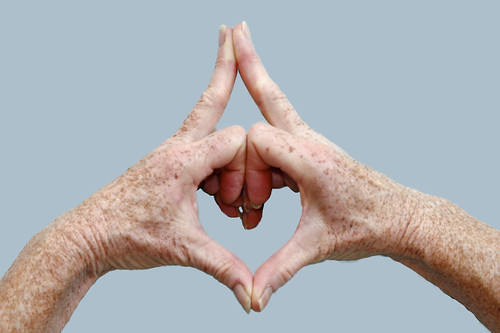


 Samadhi is a Sanskrit word which is the state of consciousness induced by complete meditation, derived from the verbal roots “samā” (the state of total equilibrium) and “dhi” (of a detached intellect).
 Dhyana is a Sanskrit word which means to meditate, derived from the verbal root dhyai, Dhyana it is the most common designation for both the meditative state of consciousness and the yogic techniques by which it is attained.
 Dharana is a Sanskrit word which means immovable concentration of the mind (or that which gives stability”) from the root Dhar, which means to “bind together”, “to make stable”. Dharanais the willful act of concentration of the mind.